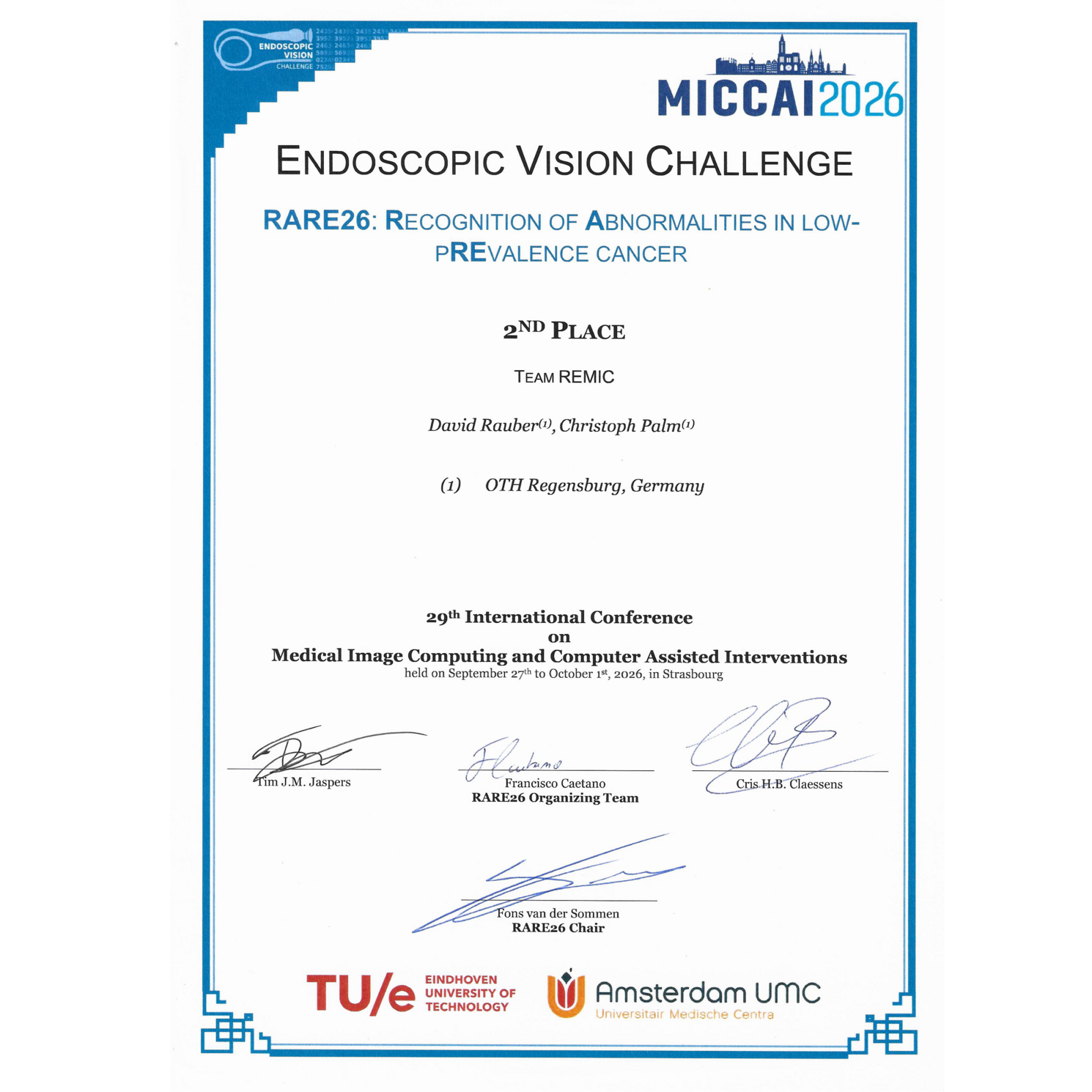
MICCAI (International Conference on Medical Image Computing and Computer Assisted Intervention) is a major conference on the application of image processing and artificial intelligence in medicine. This year, it took place in Strasbourg (France). Part of the conference is the Endoscopic Vision Challenge (EndoVis). Here, research teams compete against one another in several sub-challenges, using their methods to solve various medical problems.
One of these sub-challenges is RARE26, the results of which were announced on 27 September 2026. It addresses a difficult clinical problem: detecting malignant changes in the oesophageal mucosa at a very early stage. In a condition known as Barrett’s oesophagus, the lining of the lower oesophagus is chronically inflamed and permanently altered as a result of constant reflux of stomach acid. This can lead to precancerous lesions and early-stage tumours, which is why those affected undergo regular endoscopic examinations. Whilst the vast majority of these follow-up examinations show no abnormalities, malignant changes are found in less than one per cent of cases. This presents a major challenge for AI systems: they must reliably identify the few abnormal findings without triggering too many false alarms amongst the vast majority of normal images.
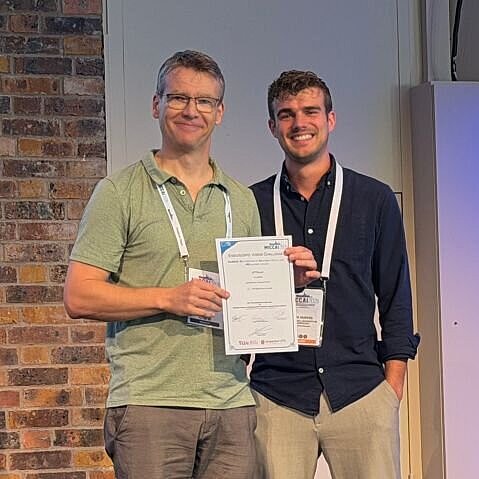
Among the 28 participating teams, ReMIC’s entry took second place, which comes with a prize of €500. As David Rauber was unable to be in Strasbourg, Christoph Palm presented the approach on his behalf in a short talk and accepted the certificate.