DIY blueprint for challenge infrastructure in medical AI
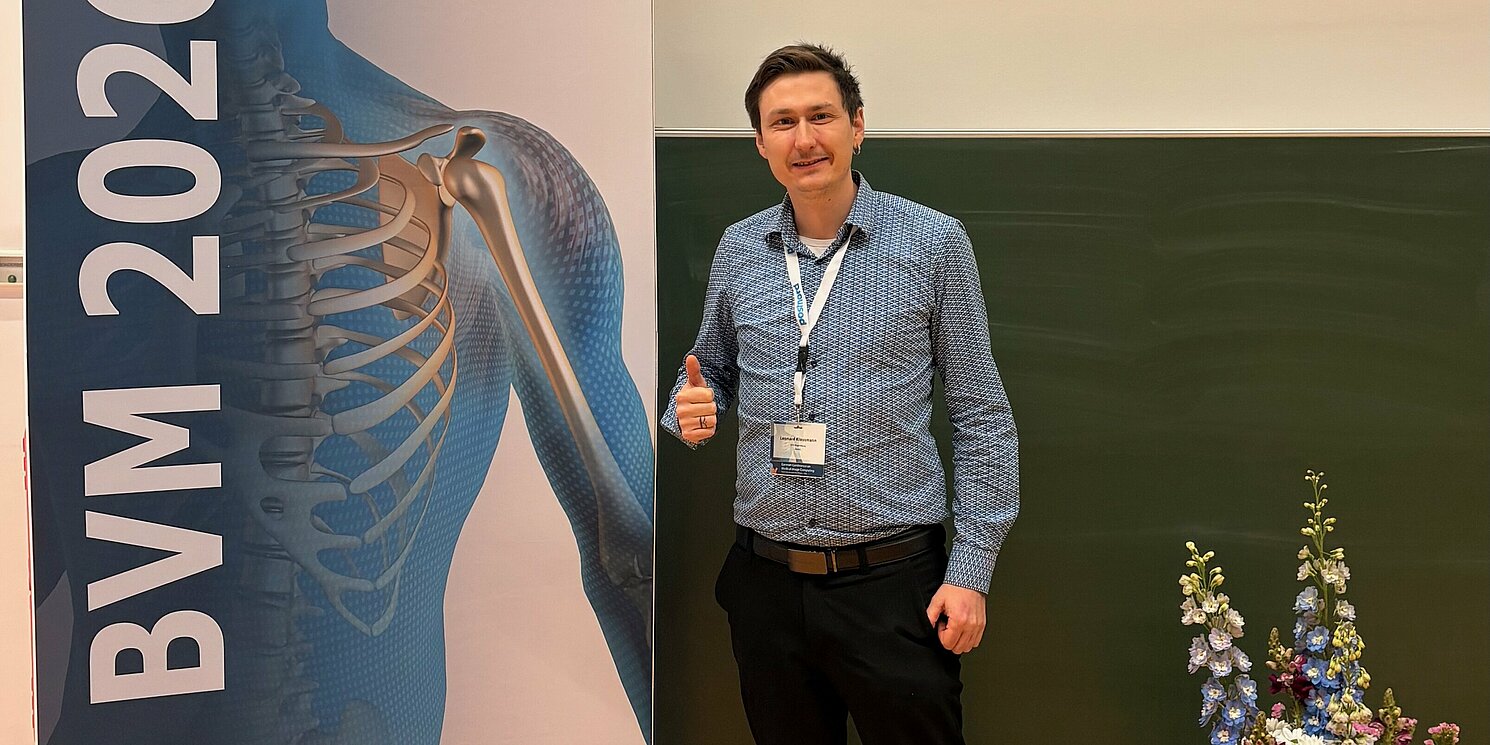
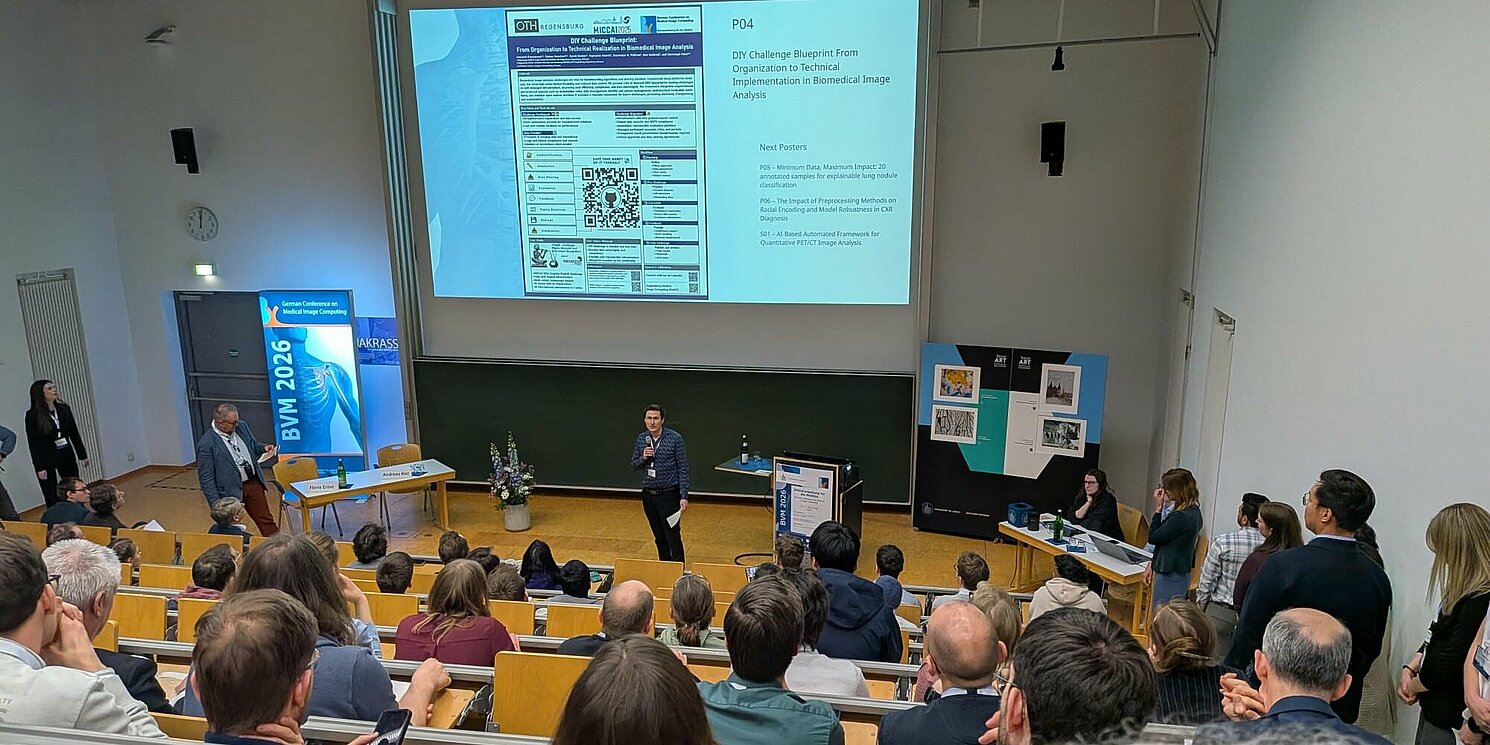
The first article - written by Klausmann together with Tobias Rückert, David Rauber, Raphaela Märkl, Sümeyye R. Yildiran, Max Gutbrod and Prof. Dr Christoph Palm - describes how researchers can run their own AI benchmarking challenges cost-effectively and with data sovereignty. "Benchmarking is an essential part of medical AI research," explained Klausmann in the interview.
Instead of relying on expensive commercial platforms, ReMIC presents a freely usable blueprint that is based on open source components and can be expanded on a modular basis. The PhaKIR Challenge (MICCAI 2024), which the lab organised completely self-hosted and attracted 14 teams with 18 international submissions, served as a practical example.(Link to the publication)
Automatic detection of tumour cells across laboratory boundaries
The second contribution by Max Gutbrod, David Rauber and Prof. Dr Christoph Palm deals with the automated detection of mitoses - dividing cells - in microscopic tissue sections. The frequency of such cell divisions is an important indicator of the aggressiveness of a tumour and is routinely assessed in cancer diagnosis.
An AI model designed to perform this detection faces a practical problem: images from different laboratories look very different due to different equipment, staining methods and preparation techniques - even if the same tissue is examined. A model that works well in one laboratory therefore often fails in another.
With "DIRT" (Domain Invariant Representation Training), the ReMIC team developed an approach that specifically trains the model to ignore these typical laboratory image differences and instead focus on biologically relevant features. In tests with ten different laboratory data sets, DIRT particularly improved the precision that is important in the clinical environment in order to reduce the number of false-positive findings.(Link to the publication)
Both studies were carried out at ReMIC under the direction of Prof. Dr Christoph Palm and are associated with the Regensburg Center of Biomedical Engineering (RCBE) and the Regensburg Center of Health Sciences and Technology (RCHST) at OTH Regensburg. The BVM is regarded as the central German-speaking conference for medical image processing; OTH Regensburg itself organised the event last year.